

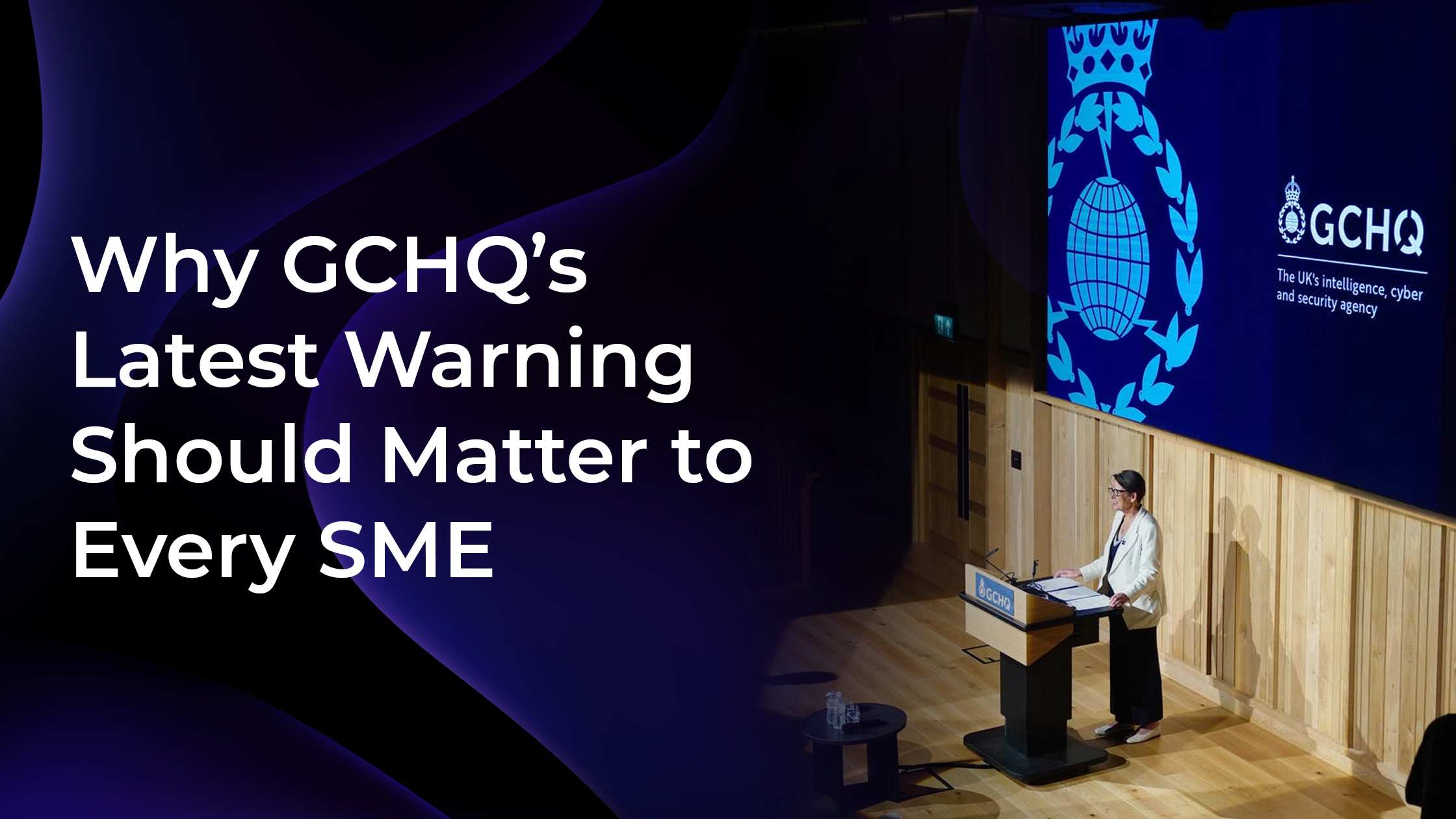
When the Director of GCHQ takes to the stage and warns that cyber security has “never been more important”, business leaders should pay attention.
For many small and medium-sized businesses, cyber security still feels like an IT issue. Something that sits with an external provider, an internal IT manager, or gets reviewed once a year when a renewal comes around.
The reality is very different.
A common misconception is that cyber-attacks are mostly reserved for large corporations, government departments, or household names. This simply isn’t the case. Businesses of every size are being targeted every day, often by criminals using automated tools that can scan thousands of organisations looking for weaknesses.
The reason is simple. Attackers don’t care how many employees you have. They care whether you’re vulnerable.
The Rules Have Changed
Ten years ago, many cyber-attacks were relatively unsophisticated. Today, attackers have access to powerful tools, artificial intelligence, and stolen credentials available for purchase online.
At the same time, businesses are becoming more dependent on technology than ever before.
Your emails, files, customer records, financial systems, phones, cloud platforms and communications all rely on digital infrastructure. If those systems become unavailable, business can grind to a halt.
Cyber security is no longer about protecting computers. It’s about protecting the ability to operate.
Why SMEs Are Attractive Targets
Many business owners assume attackers are focused on larger organisations. Unfortunately, that assumption can create a false sense of security.
Smaller businesses often have:
- Fewer security controls
- Limited internal IT resources
- Less cyber security training
- Older systems
- Smaller budgets
From an attacker’s perspective, that can make them easier targets.
In many cases, cyber criminals aren’t specifically targeting your business. They’re scanning for weaknesses and taking advantage wherever they find them.
The Cost of Doing Nothing
The financial impact of a cyber incident can be significant. Lost productivity, operational downtime, recovery costs, reputational damage and potential regulatory issues can quickly add up. Even a relatively small incident can consume days or weeks of management time.
For many organisations, the disruption itself is often more damaging than any immediate financial loss.
What Businesses Should Be Doing Today
The good news is that improving cyber security doesn’t necessarily require huge investment.
Some of the most effective measures remain relatively straightforward:
- Enable multi-factor authentication across all systems
- Keep software and devices updated
- Train staff to identify phishing attempts
- Review user permissions regularly
- Ensure backups are secure and tested
- Monitor systems for unusual activity
Most importantly, understand your current level of risk. You cannot protect what you haven’t assessed.
Cyber Security Is a Business Issue
The strongest message coming from the UK’s cyber experts is that cyber security can no longer sit solely within IT. Business leaders need visibility of the risks, an understanding of potential impacts, and a clear plan for reducing exposure.
Technology will continue to evolve. Threats will continue to evolve with it.
The businesses that thrive will be those that treat cyber security as a fundamental part of resilience, not an afterthought.
Cyber Security Health Check
Is your business as protected as it should be?
If you’re unsure where your biggest cyber security risks lie, Artemis can help. Our cyber security assessment provides a clear view of your current security posture, highlights areas of concern, and offers practical recommendations to improve resilience.